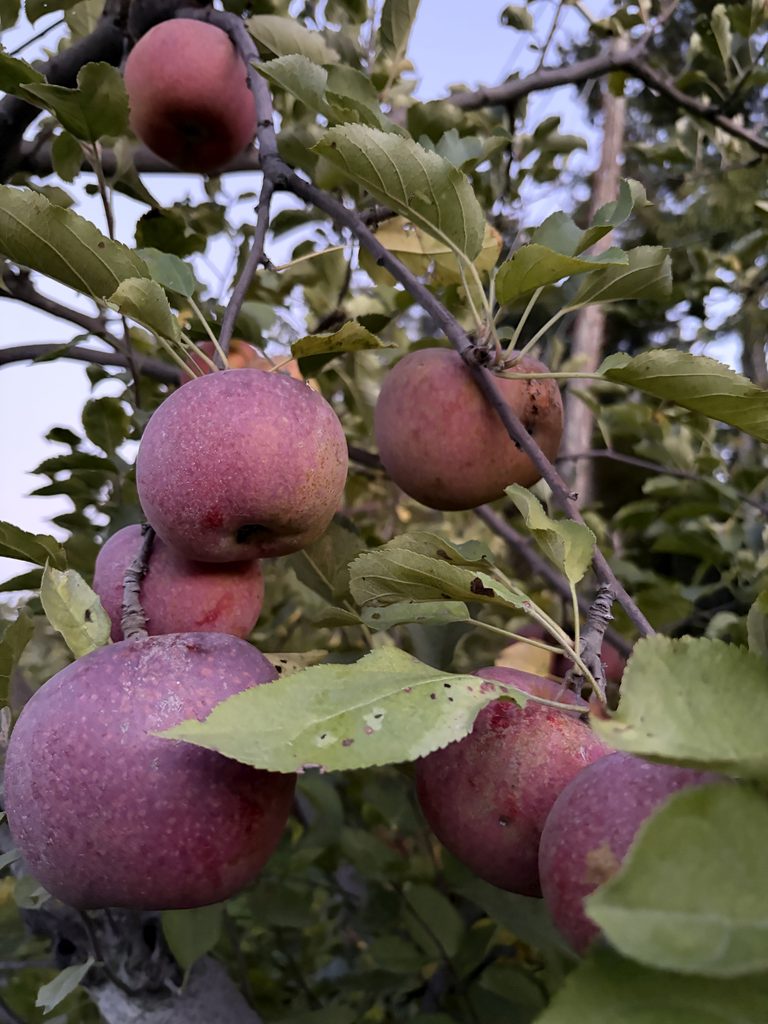
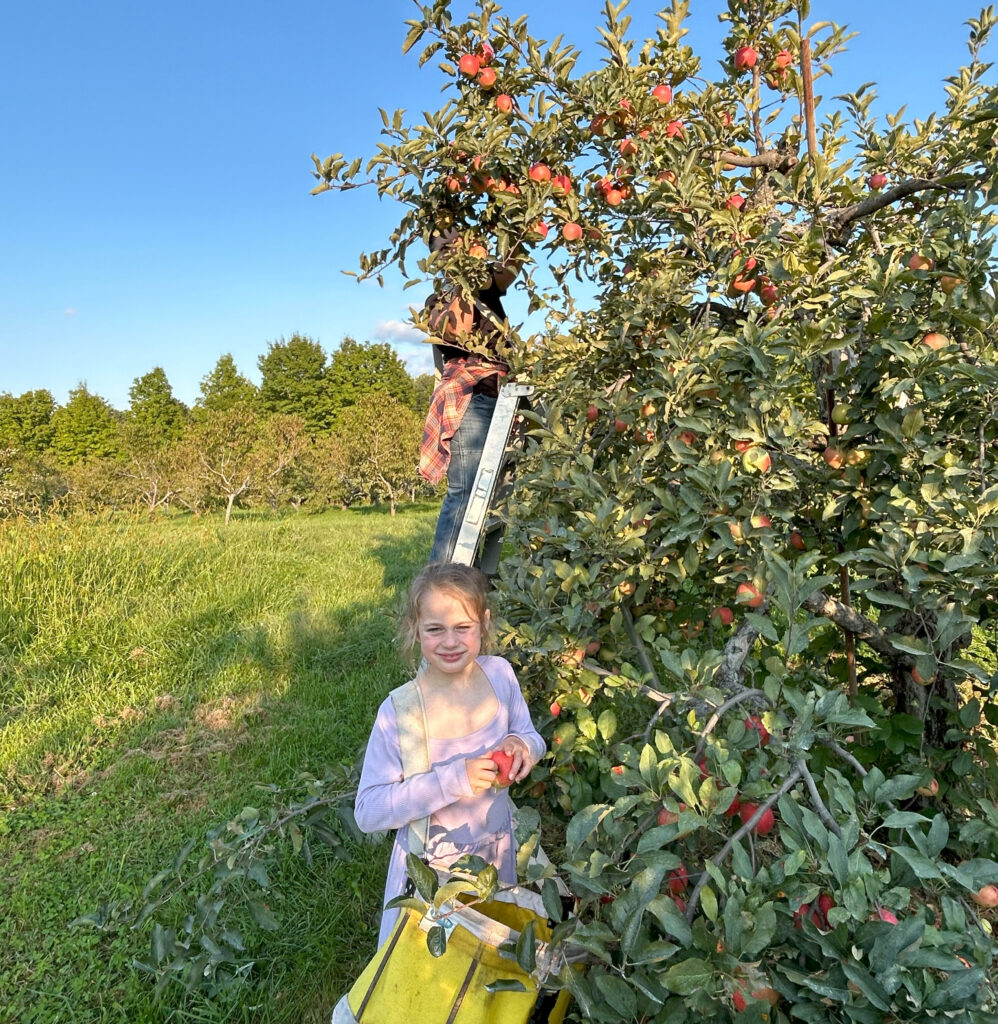
We will be doing pick-your-own (PYO) the weekends of October 17-18 and 24-25, but we will not be staffing a table so it will be more of a DIY situation. Hours for picking will be 9am-5pm..
If you want to pick, please:
- Park off the Middle Street entrance (about 100 yards north from the Bay Road intersection, not at the farmstand location — GPS usually works if you plug in 579 Middle Street.)
- Either pay by Venmo at the unstaffed table or walk up to the farmstand to pay by credit or cash. Because our EBT processing is down, we are offering half-price on PYO for SNAP participants.
- Grab peck or half-peck bags and a map and variety list wherever you pay.
- Head out to the orchard following the Apple arrow signs and if you run into any problems, please call the phone number posted at the table.
Bring family, friends, and your camera, and feel free to pack a lunch and a picnic blanket, or use our picnic tables. We’ll have a few fun activities set up for kids, including slingshots for dropped apples, bouncy balls, and bag toss. Sorry, no pets or tree-climbing allowed, and no public bathroom available.
Varieties at peak for PYO include Empire, Spigold, Mutsu, Jonagold, Golden Delicious, Fuji, and Red Delicious. There’s still some Liberty and Cortland to be found, and a few Macoun. Ida Red is plentiful but should be sweeter by 10/24 than it is as of this posting.
If you’re shopping on weekdays or are looking for other varieties (McIntosh, Cortland, Davey, Spencer) or Asian pears, try the farmstand. You’ll also find fresh-pressed apple and apple-pear cider, cider slushies (weekends), apple butter, raspberry jam, and honey. If you are doing PYO, it’s a short walk to the farmstand from that parking area. If you don’t have time to pick, you can pull into the farmstand driveway at 416 Bay Road and take a few minutes to shop. We take all forms of payment.

And a reminder, we grow using OMRI-approved materials, but are not certified organic, and we did make a single exception this year to use a synthetic plant growth regulator only on Asian pears to try to save the crop after an April frost. This is not an easy way to grow fruit in New England, and you will see signs of disease or insect damage on some fruit. Some affected fruit are still sound enough to use for cider, so we’ll provide information about how you can get the fruit you want while reducing food waste and helping with the cider season.